
When planning a large museum display case, dimensions and delivery access are only part of the preparation. If the case includes lighting, its final location also needs to work with the room’s electrical layout.
Thinking about lighting and power before the case arrives can help prevent inconvenient cord placement, inaccessible outlets, unnecessary repositioning, and last-minute changes after a large case has already been moved into place.
For museums, galleries, universities, and other exhibit spaces, these details are worth reviewing before the display case is ordered and delivered.
Confirm the Lighting Configuration Before Ordering
Start by considering what needs to be illuminated inside the case.
The size and position of artifacts, mounts, labels, shelves, and other display elements can influence where lighting is most useful. A tall object may need a different lighting approach than a case with several shelves, while wide exhibits may require attention to how evenly light reaches different areas.
Also consider how visitors will view the exhibit. Lighting that works from one angle may create reflections or shadows from another.
Depending on the display case model, different lighting configurations may be available. Discuss the intended exhibit with Tecno Display before ordering so the lighting arrangement can be considered while the case is being specified.
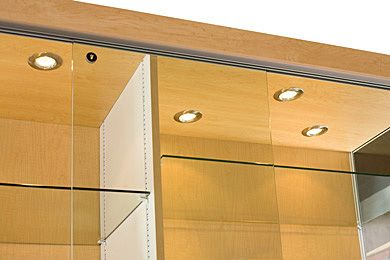
Powerful LED Down Lights
Check the Outlet Location
Once you know approximately where the display case will be positioned, identify the nearest appropriate electrical outlet.
Do not assume an outlet behind the case will automatically be convenient. A large case may cover the outlet or make it difficult for staff to reach after installation.
Before delivery, consider:
Where the nearest outlet is located
How the power cord will reach it
Whether the switch will remain accessible
Whether the cord will be visible to visitors
Whether the cord could interfere with doors, access panels, wheels, or levelers
Whether facilities staff or an electrician needs to prepare the area
If changes to the building's electrical system are needed, completing them before the display case arrives can simplify final placement.
Plan the Cord Route
Cord routing is especially important in open exhibit areas.
A power cord should not create an avoidable obstacle across a visitor walkway or staff work area. It should also be positioned so that routine exhibit access does not require staff to move or disconnect the case unnecessarily.
Think about the entire path from the case to the outlet rather than only the distance between the two.
For cases positioned away from a wall, discuss the layout with your facilities or exhibit team early. Floor outlets, architectural power locations, and other building-specific solutions may need to be incorporated into the exhibit plan.
Consider the Room Lighting Too
Internal case lighting does not operate independently from the rest of the gallery.
Overhead fixtures, windows, spotlights, wall lighting, and other sources can change the way visitors see objects through glass. Reflections may become more noticeable from certain viewing angles, while shelves or large objects can create shadows within the case.
Evaluate the case location and the room together.
If the collection contains objects with specific light-exposure requirements, involve the appropriate curator, conservator, or collections professional when determining suitable lighting levels. The case lighting should support both the exhibit presentation and the requirements of the objects being displayed.
Prepare the Final Location Before Delivery
Planning becomes even more important when a large display case arrives assembled.
Before delivery day, confirm the final case location, receiving route, outlet access, lighting requirements, and cord path. This reduces the chance that a large case will need to be moved again simply because an outlet is blocked or the planned electrical connection does not work with its final position.
Also confirm whether shelves, removable components, lighting connections, or other final setup steps will need attention after the case is placed.
What to Discuss Before Ordering
A useful conversation with your display case manufacturer should include the case dimensions, exhibit contents, lighting requirements, shelf or mount arrangement, viewing angles, outlet location, cord routing, final case position, receiving access, and any collection-specific requirements.
These details help connect the display case itself with the room where it will actually be used.
Plan the Case and the Space Together
A large museum display case should not be planned as an isolated piece of furniture. Lighting, electrical access, visitor circulation, exhibit layout, and delivery all affect how successfully the case works once installed.
Addressing those details before delivery can make final placement easier and help ensure the display is ready for its intended exhibit.
Planning a museum display case project? Contact Tecno Display to discuss case dimensions, lighting options, delivery requirements, and other details before ordering.
Call (800) 255-3536 or email tecno@tecnodisplay.com.