
Choosing between one oversized display case and several smaller cases starts with the objects and the story your exhibit needs to tell. A larger case can keep a related collection together, while separate cases can give different objects or themes their own space. The better choice depends on usable interior dimensions, viewing arrangements, staff access, and the route into your building.
For museum buyers, curators, and exhibit designers, comparing both layouts before requesting a quote helps clarify which standard museum display cases may suit the project and where a modification might be useful
When one oversized case makes sense
One large case can suit a display that visitors should understand as a group. Related artifacts, a long object, or a shared mount may need a continuous display area. Keeping those elements together can also allow a single sequence of labels within the case.
Start with a scaled arrangement of the objects, mounts, supports, and labels. Leave space for the handling your team needs. Several smaller cases cannot substitute for one uninterrupted interior when an object or mount must remain in a single piece.
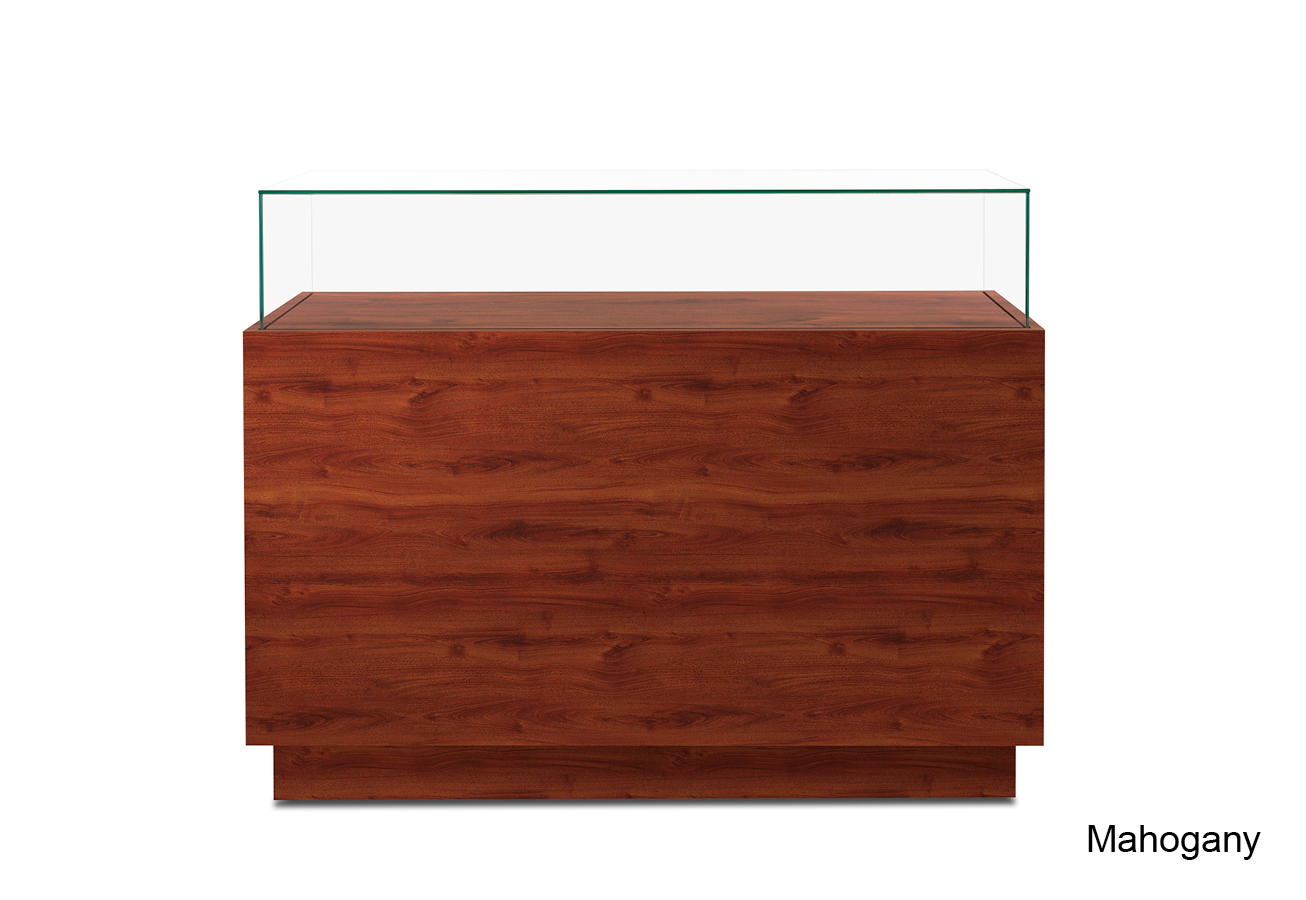
The Tecno Display MU465 offers a starting point for a wide, relatively shallow exhibit. Its listed exterior widths are 37 5/8, 49 5/8, 61 5/8, and 73 5/8 inches, with a depth of 21 11/16 inches. Listed total heights are 39, 42, or 48 inches. The model has a lift-off glass top and two push locks and is delivered fully assembled. Confirm the selected configuration, usable interior dimensions, clear loading area, and supported load before ordering.
When several smaller cases may work better
Separate cases can help organize an exhibit around distinct themes, time periods, or featured objects. In a hypothetical local-history exhibit, one case might introduce a person through letters and photographs, while another presents objects associated with their work. Each group would need enough room for its own interpretation.
Several cases may also give you more placement choices around columns, alcoves, or existing exhibits. Compare the actual layout, however: gaps between units and room for visitors can make a group of smaller cases occupy more gallery space than expected.
For future exhibitions, consider whether the proposed cases could serve useful roles individually. Any relocation still needs a handling plan suited to the case; smaller dimensions alone do not establish that a case is easy to move.
Compare the complete gallery footprint
Mark both arrangements on a scaled floor plan. Include the cases, visitor viewing positions, label locations, and the working space needed to open doors or remove tops.
A wide case may suit a central grouping, but objects at the back still need to be visible from the intended viewing positions. Separate cases can create several stopping points; check whether people reading one display would obstruct another. Review the plan with the staff responsible for visitor circulation and accessibility.
Plan staff access and exhibit changes
Compare the work involved in loading, cleaning, and changing each arrangement. A lift-off design needs appropriate personnel, handling instructions, and a suitable place for the removed top. A case with doors needs room to operate them and a clear opening that accommodates the mounted object.
One larger case concentrates the changeover in a shared space. Several cases may let staff work on one grouping at a time, but they also create more individual access points and surfaces to manage. Discuss how frequently the display will change and who will carry out the work.
Include assembled delivery in the comparison
Tecno Display cases ship assembled, reducing the case construction your team coordinates on site. Compare the confirmed packaged dimensions, weights, and handling requirements for both proposed orders. Check receiving doors, corridor turns, elevators, and the final approach to the gallery.
Several smaller cases may suit a route that cannot accommodate a larger unit, but each shipment still needs suitable receiving arrangements. Confirm what the quotation includes for unloading, inside delivery, uncrating, and placement. Our assembled display case delivery guide explains the questions to resolve before shipment.
Compare total project cost and collection needs
Ask for comparable quotations that include the required case configurations, lighting if needed, freight, and receiving services. Consider mounts, labels, electrical connections, installation labor, and future exhibit changes. Case quantity alone does not tell you which arrangement will cost less.
Give Tecno Display any written collection-care or lender requirements for materials, light exposure, and the exhibit environment. If different objects have different requirements, discuss whether separate cases would help your team manage them. Suitability needs confirmation for the exact configuration.
Request a quote for the layout your exhibit needs
Tecno Display has manufactured glass display cases in the USA since 1978. Start with a suitable standard model and discuss feasible modifications when the exhibit requires them.
Request a quote with object and mount dimensions, photographs, your proposed layout, case quantities, delivery access information, budget range, and target date. If you are still comparing one large case with several smaller ones, share both arrangements so we can discuss suitable model options.
Call (800) 255-3536 or email tecno@tecnodisplay.com.