
Walk through your museum gift shop just after a tour lets out. A few visitors stop to browse the featured merchandise, someone asks to see a pair of earrings, and two customers are ready to pay. Where would a glass case help in that moment? If visitors need room to linger over a collection, a freestanding tower can give them a place to browse. If staff regularly retrieve small items during a sale, a countertop case near checkout may be the better fit. Start with the way the shop works on a busy day, then choose the fixture.
Decide what goes behind glass
Pick a group of products you expect to display together. A tray of locally made pins, a series of small sculptures, and boxed editions of an exhibit catalogue call for different shelf spacing and ways to present prices. Measure the tallest and deepest pieces with their stands or packaging. Note which items visitors tend to ask to hold, which they browse on their own, and how often staff replenish the display.
Plan where the rest of the range will go. Open shelving can carry extra stock, postcards, or other items visitors can pick up themselves. That leaves room in the glass case for the featured merchandise, a price card, and a short note about the maker or its connection to the exhibit.
Measure the countertop as a working surface
A glass countertop case suits pieces staff can show during a sale, such as artisan jewelry or small signed keepsakes. Measure the counter with the register, card reader, and bagging supplies in their usual places. Leave a clear spot for taking payment and setting out an item for a closer look. Check whether the case will interrupt the view between the employee and the shopper.
Tecno Display lists the CT620 at 24 inches wide and 18 inches deep, with a locking pullout deck. Those are exterior dimensions. If you are considering a pullout design, ask how far the deck extends and how much room the employee needs behind it. Bring your tray measurements so you can also check the usable space inside. Explore countertop display cases.
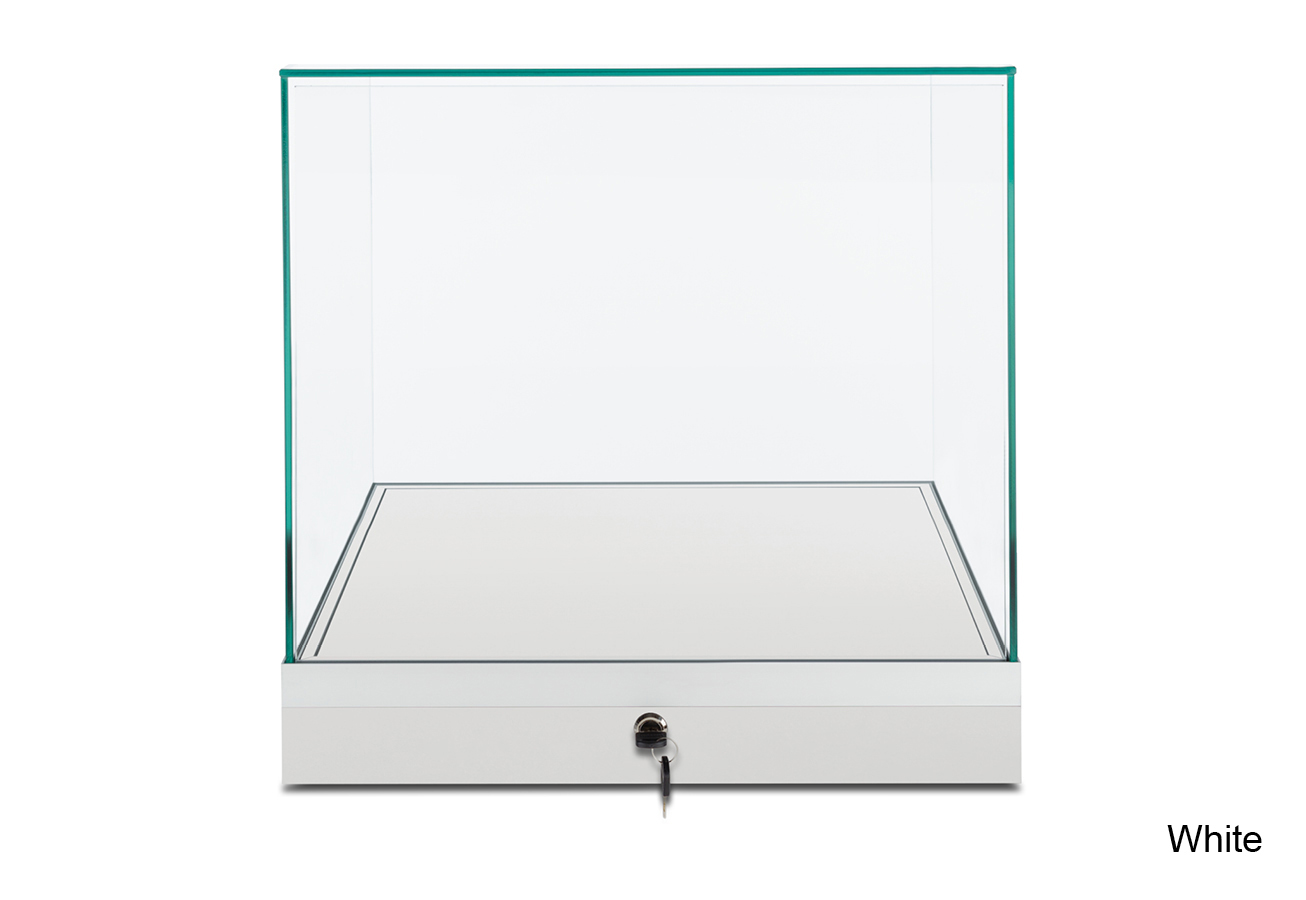
Get started with the CT610 20"
Lay out a tower case with the door open
A freestanding glass tower gives several shelves to a collection without taking up counter space. Tecno Display’s TW300 has adjustable glass shelves and a locking hinged door. Tape out the exterior footprint and mark the door swing on the shop floor. Walk from the gallery exit to the display, then to checkout. Test whether someone can pass a visitor who has stopped to read a label while an employee works at the open case. If your planned case has lighting, check outlet placement and where the cord will run. Compare tower display cases.
Check what visitors can see through the glass
Set up a sample shelf with actual merchandise. Include the product tag, price, and any riser you plan to use. Look from the direction most visitors approach and from a seated position. Can someone recognize the object and read the price before they have to step closer? Set smaller pieces toward the front if a deeper box would hide them. Give tall pieces their own space so a shelf edge or label does not cover the detail visitors want to see.
If there is a glass display nearby, check how the shop’s windows and overhead lights reflect in it at the time of day when the store is busiest. Use that check to decide which direction the new case should face and whether you want integrated lighting. Ask for the usable shelf dimensions and the load rating for the shelf configuration you would order, especially if you plan to display ceramics or other heavier pieces.
Try a sale and a restock before ordering
Ask an employee to act out a sale using the proposed case location. Have them open the case, take out a piece, show it to a shopper, and put it back or move it to the wrapping area. Try the same routine with a second customer waiting. If the staff member has to move the register supplies or step into the checkout line, change the placement or ask about a different door configuration.
Then test a restock. Decide where backup inventory and fresh labels will live. If the mix changes with each exhibition, check whether staff can reset the case with the shelves and fixtures you plan to order. Bring both a short set of merchandise and a taller piece to the layout review so you can compare how each fits.
Choose one case around your busiest task
Imagine a shop introducing jewelry and small ceramic pieces made by artists featured in an upcoming exhibition. With one new fixture in the budget, the team could use a countertop case for the jewelry if staff frequently get requests to show individual pieces. If visitors already stop to compare the ceramics and read about the artists, the shop could give those pieces a tower and move the maker cards alongside them. The better first purchase supports the activity the shop already needs room to handle.
Send your layout with the quote request
Include photos of the proposed location, the available width and depth, and dimensions for the largest items with their stands. Mark the preferred side for staff access and describe how the merchandise will change throughout the year. If you are considering both case styles, show where each could go. Request a quote from Tecno Display and share your layout so we can help you compare configurations for your shop.