
Start with the complete display
Choosing museum display case glass height starts with the objects and everything supporting them. A document lying flat, a medal on a mount, and an open book on a cradle can need very different amounts of vertical space.
Tecno Display lists 9-, 12-, and 18-inch glass heights on select museum cases, including the MU400, MU410, and MU465. These options provide a starting point for comparing a low display with a taller enclosure. The final choice depends on confirmed interior dimensions, visitor views, and how staff will install and change the exhibit.
Start by comparing our museum display cases, then evaluate the height against your actual display arrangement.
Measure objects and mounts together
Measure each object in its intended display position, including its stand, cradle, riser, and any upright labels. Record width and depth as well as height. A tilted object may need more vertical space than it does in storage.
For a hypothetical example, a 7-inch object on a 2-inch riser already reaches 9 inches before allowing space above it. That does not establish that it will fit beneath a listed 9-inch glass area.
Ask for the usable interior height of the exact configuration, measured from the finished display surface to the lowest obstruction above the objects. Confirm room for placement and removal, and check whether lighting or other components affect clearance.
Compare the three glass heights
Use the following as planning examples, subject to confirmed interior fit. An object category alone does not determine the right height.
Listed glass height | Display arrangements to evaluate | Main question |
|---|---|---|
9 inches | Flat documents, medals, or other low objects on shallow supports | Will the complete display fit with the required clearance? |
12 inches | Small three-dimensional objects, angled supports, or modest risers | How much height do mounts and labels add? |
18 inches | Taller objects or arrangements using higher mounts | Do the extra height and overall proportions suit the exhibit? |
A 9-inch glass area is worth evaluating when the exhibit stays close to the deck. Confirm the height of every support, especially when documents or small objects are angled toward visitors.
A 12-inch option provides a taller enclosure to assess when mounts, book cradles, or raised objects need more room. It still requires an interior-dimension check.
An 18-inch option provides the tallest listed glass area in this comparison. Consider it for taller arrangements or planned changes, while checking whether a different case format would better suit the objects.
Separate glass height from overall case height
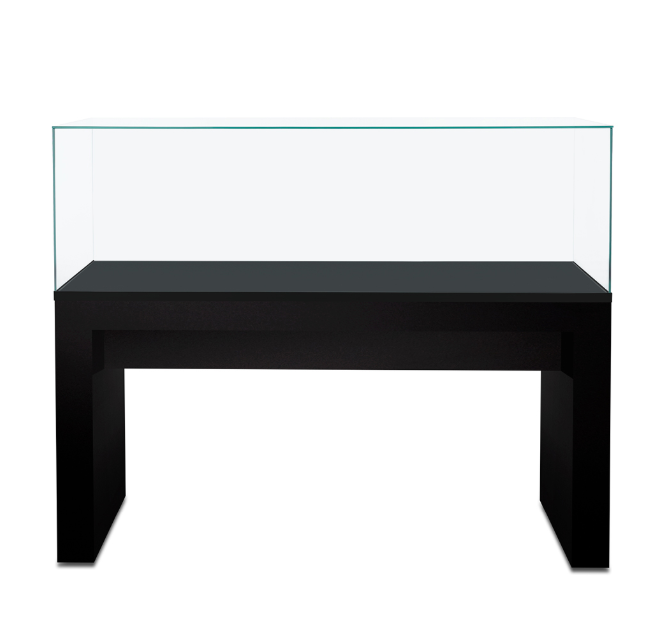
The MU410 museum display case lists a 30-inch cabinet height with these standard height combinations:
Listed glass height | Listed overall case height |
|---|---|
9 inches | 39 inches |
12 inches | 42 inches |
18 inches | 48 inches |
Glass height describes the glass area; overall height describes the complete case. Neither measurement by itself confirms usable interior clearance or the precise height of an object above the floor.
Compare these dimensions with a simple mock-up of the display surface, object positions, and top of the case. Review views for visitors of different heights, including seated visitors, and check label readability from the intended approach.
Plan lighting and access before ordering
MU410, MU400, and MU465 list lift-off glass tops and fully assembled delivery. Their product pages list LED pole lights and an LED light bar as options. Confirm the selected lighting arrangement, power needs, and any effect on object placement.
For a lift-off top, ask about top dimensions and weight, the handling procedure, working space, and where staff will place the removed enclosure. Include the frequency of exhibit changes in that conversation.
Assembled shipping reduces construction work at the destination. Plan unloading, the building route, placement, and final setup separately, and confirm which services are included.
Choose for the collection and the next exhibit
If the case will serve changing exhibits, compare the tallest realistic future arrangement as well as the first display. A taller glass area may accommodate different layouts, but confirm each arrangement against usable space and handling needs.
Share written collection-care or lender requirements with Tecno Display before specifying materials and lighting. Glass height alone does not establish conservation performance.
Request a quote for your museum display
Tecno Display has manufactured glass display cases in the USA since 1978. Begin with a standard model and discuss appropriate modifications if the exhibit calls for them.
To request a quote, send object and mount dimensions, weights, photographs, preferred case width and glass height, lighting needs, display-change plans, receiving constraints, and any collection-specific requirements. We can review the proposed configuration and identify the dimensions and access details to confirm before ordering.
Call (800) 255-3536 or email tecno@tecnodisplay.com.