
When planning a display case project, one of the first decisions is whether to start with a standard model or invest in a custom design.
A custom display case is not automatically the better choice. If an existing case already fits the available space, provides the necessary access, and supports the objects or merchandise being displayed, a standard configuration may be the simplest solution.
Custom design becomes worth considering when the display case needs to solve a specific problem that an existing configuration cannot.
What Is the Difference Between a Standard and Custom Display Case?
A standard display case begins with an established model, size, and configuration. Depending on the case, buyers may still be able to select or modify features such as finishes, lighting, shelving, glass configuration, or other options.
A custom display case is designed around more specific project requirements. This may include changes to the overall width, depth, or height as well as adjustments to cabinetry, lighting, shelving, access, finishes, storage, and security.
There is also a middle ground. In many projects, starting with a proven standard design and modifying only the features that matter can provide the benefits of customization without redesigning the entire case.
When Does a Standard Display Case Make Sense?
A standard case is often a good starting point when:
The available floor or wall space accommodates an existing case size.
The objects or merchandise fit comfortably within the display area.
Standard shelving and access provide enough flexibility.
Existing lighting and security features meet the project's needs.
The surrounding interior does not require the case to match specific architectural dimensions.
For example, a jewelry store may find that a standard jewelry display case already supports its merchandise and customer interaction. A school may find an existing trophy display configuration that provides the necessary visibility and storage.
If a standard case accomplishes the project's goals, adding unnecessary customization may not provide meaningful value.
When Is Custom Design Worth It?
1. The Case Has to Fit a Specific Space
Existing buildings do not always provide convenient display locations.
A case may need to fit between columns, align with existing millwork, occupy a specific wall opening, maintain a walkway, or work within an unusual room layout.
In these situations, adjusting the width, depth, or height of the display case can help integrate it into the space rather than forcing the space to accommodate the case.
2. The Objects Have Unusual Dimensions
The contents of the case should help determine its dimensions.
Museum artifacts, full-size uniforms, large trophies, sculptures, specialized retail products, and mounted objects may require more height, depth, or uninterrupted display space than a typical configuration provides. Explore our museum display cases to see available display solutions.
Before choosing a case, measure both the objects and any mounts, stands, labels, or supporting materials that will occupy the enclosure.
Custom dimensions can be worthwhile when they provide the usable display space the collection actually requires.
3. Staff Need a Particular Type of Access
How a display looks from the visitor or customer side is only part of the planning process.
Consider how employees will install objects, change merchandise, clean the interior, adjust shelves, or access storage after the case is in place.
Door location, opening size, shelving arrangement, pull-out areas, and storage configuration can all affect day-to-day use.
If a standard access configuration would make routine exhibit or merchandise changes difficult, modifying the case may provide long-term practical value.
4. Lighting, Security, or Storage Requirements Are Different
Different collections have different presentation and operational requirements.
A project may call for additional lighting, a particular light placement, locking access, enclosed storage, specific shelf spacing, or another configuration that is not part of the basic design. Explore Tecno Display's display case product information to learn more about available features and options.
These are good reasons to discuss customization early rather than trying to adapt the case after it has been manufactured.
5. The Display Needs to Match the Surrounding Environment
For retail stores and commercial interiors, the display case may be an important part of the overall design.
Dimensions, finishes, cabinetry, lighting, and case configuration can help multiple displays work together as a coordinated package.
Custom design can be especially useful during store remodels, new construction, museum installations, and projects involving several cases that need to share a consistent appearance.
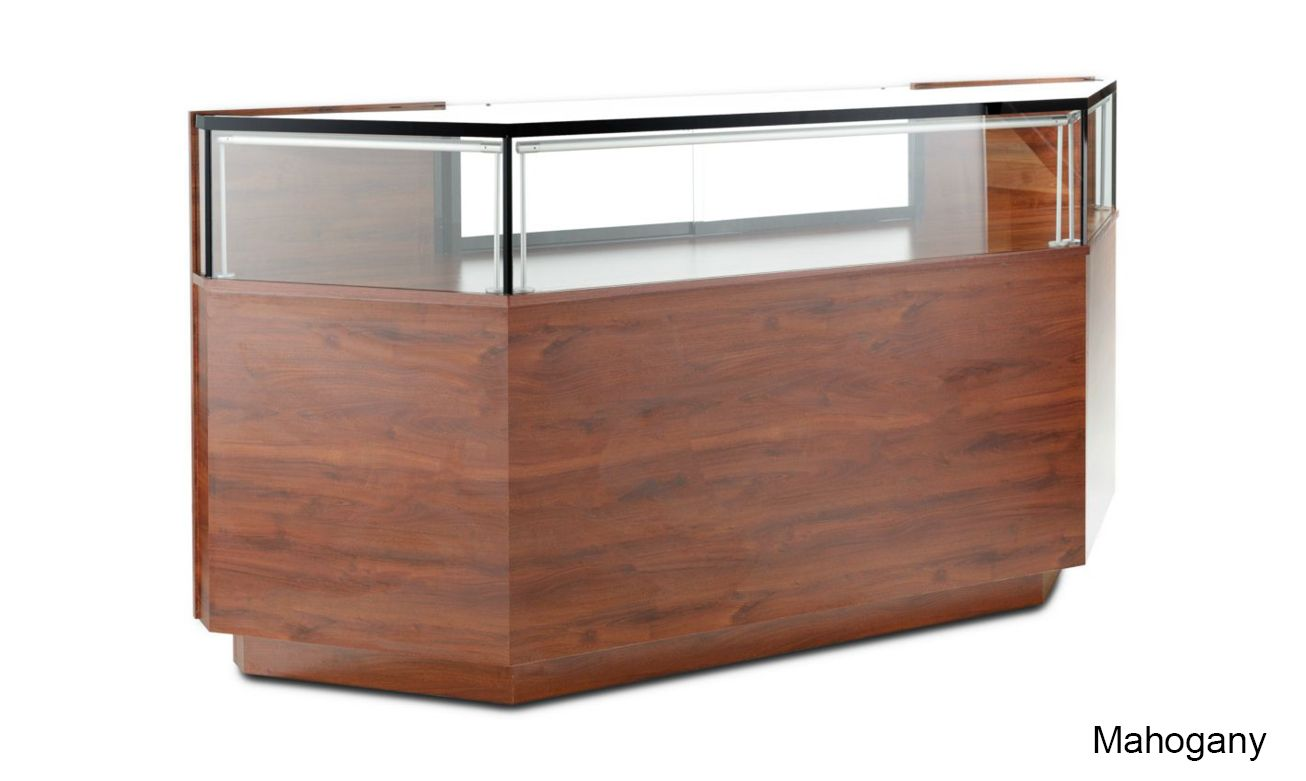
This mahogany corner counter display case features an angled design that helps maximize retail space while providing clear product visibility.
Custom Should Solve a Real Problem
The most useful question is not simply, “Can this case be customized?”
Instead, ask: “What would customization improve about this project?”
If the answer is better fit, more usable display space, easier staff access, improved lighting, stronger security, better organization, or closer integration with the surrounding interior, custom design may be worthwhile.
If an existing configuration already meets those requirements, a standard model may be the smarter choice.
Start With Your Project Requirements
Before requesting a quote, gather the information that will determine which approach makes sense:
Available width, depth, and height
Object and mount dimensions
Required viewing angles
Staff access requirements
Shelf quantity and spacing
Lighting and nearby power
Security and locking requirements
Preferred finishes
Storage needs
Delivery and receiving access
Tecno Display manufactures both standard and custom glass display cases for museums, jewelry stores, schools, universities, retailers, galleries, and commercial environments.
If you are unsure whether an existing model will work or whether your project requires custom dimensions or features, contact Tecno Display to discuss the space, the items being displayed, and the way the case will be used.
Request a quote to discuss the best option for your display. Call (800) 255-3536 or email tecno@tecnodisplay.com.